M2 Master Reference Monitor
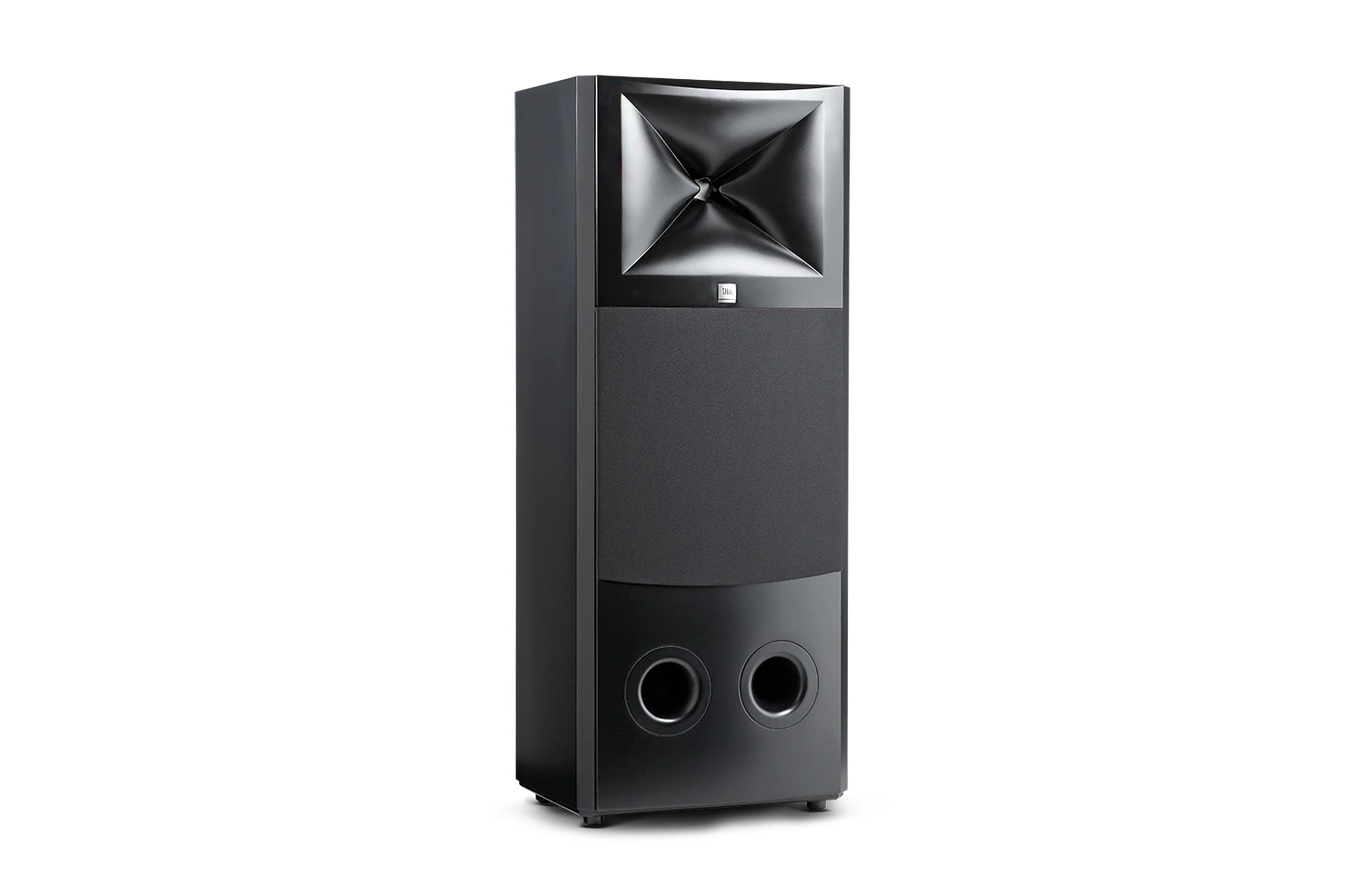
An externally powered two-way main monitor with a 15in Differential Drive LF, D2 dual-diaphragm HF and 120° × 100° Image Control Waveguide.
- Drivers
- 15in 2216Nd LF + D2430K D2 HF
- Maximum SPL
- 123dB peak at 1m
- Coverage
- 120° H × 100° V
Product Overview
M2 Master Reference Monitor is JBL Professional's large-format two-way main monitor for music production, cinema and broadcast. A 15in 2216Nd LF and D2430K compression HF cross over at 800Hz, while a large Image Control Waveguide provides nominal 120° horizontal × 100° vertical coverage.
Amplification and crossover processing are external: the system is bi-amplified through specified Crown iTech amplifiers and dedicated DSP tunings. JBL's Linear Spatial Reference design considers radiation around the loudspeaker, not only the on-axis response, to account for the combination of direct and reflected sound in a room.
Specifications
- System
- Two-way, externally processed and bi-amplified, floorstanding or soffit-mounted
- Drivers
- LF: 2216Nd 15in Differential Drive; HF: D2430K dual-diaphragm, dual-voice-coil compression driver
- Frequency response
- 20Hz–40kHz (±3dB in-room response)
- Maximum SPL
- 117dB continuous / 123dB peak at 1m; 108dB peak at 8m
- Coverage
- 120° horizontal × 100° vertical
- Crossover
- 800Hz
- Sensitivity
- 92dB
- Specified amplification / processing
- One Crown iTech 5000HD per monitor or one iTech 3x3500HD per pair, with dedicated M2 tuning
- Dimensions
- 1,256 × 508 × 355.6mm (H × W × D)
- Weight
- 58.5kg each
Design & Technology
Large waveguide controlling directivity to 800Hz
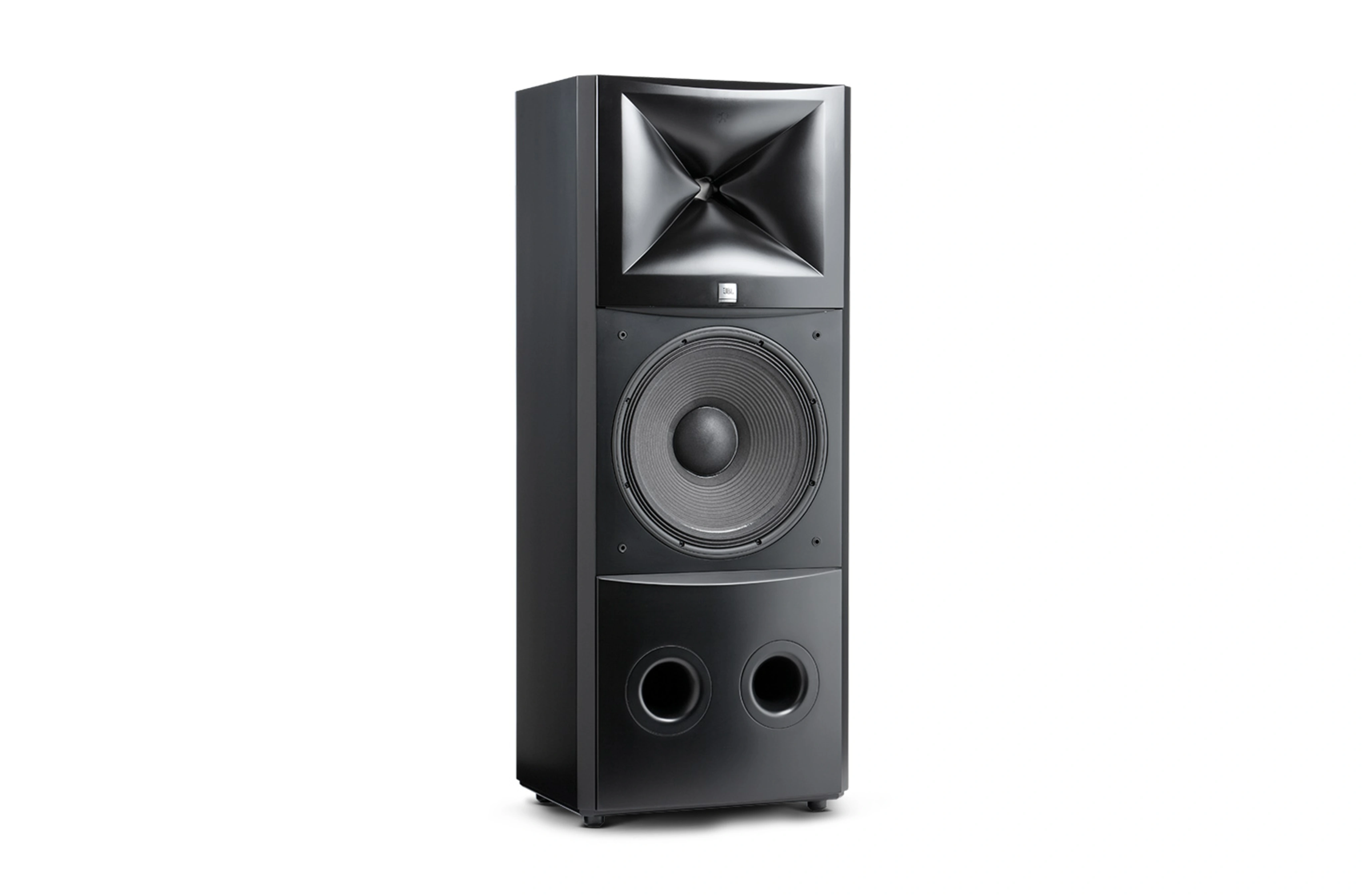
The D2430K HF loads into a 120° horizontal × 100° vertical Image Control Waveguide. JBL designed it to control horizontal and vertical off-axis response down to the 800Hz crossover and manage the radiation transition to the 15in LF.
Linear Spatial Reference includes surrounding radiation
Linear Spatial Reference is JBL's design method for evaluating measurements around a loudspeaker rather than only its frontal on-axis response. In the M2, off-axis behaviour affecting both direct and room-reflected sound is included in waveguide and system tuning.
Two annular diaphragms combined into one acoustic output
The D2430K D2 compression driver uses two low-mass polymer annular diaphragms and two 3in voice coils. Two motor structures combine into one acoustic output, extending HF response to 40kHz while sharing thermal load.
2216Nd with dual magnets and voice coils
The 15in 2216Nd LF employs Differential Drive construction with two neodymium magnets and two voice coils. JBL combines its magnetic and thermal design, including dedicated voice-coil wire, to reduce power compression at high output.
Crossover and tuning processed in Crown amplification
The M2 contains neither amplification nor a passive crossover. Dedicated M2 settings in Crown iTech amplification drive LF and HF separately, handling crossover, response tuning, limiting and installation adjustment in the electronics.
25mm MDF and Slipstream port
The enclosure uses 25mm MDF with internal bracing informed by laser-interferometer vibration checks. Its bass-reflex system uses a flared Slipstream port, and the cabinet supports both floorstanding and soffit-mounted installation.
Sources
- 01JBL ProfessionalM2 Master Reference Monitor
Manufacturer product page · Accessed August 15, 2026
- 02JBL ProfessionalM2 Master Reference Monitor Brochure
Official datasheet · Accessed August 15, 2026
- 03JBL ProfessionalM2 Set Up Instructions
Official manual · Accessed August 15, 2026
- 04JBL ProfessionalImage Control Waveguide
Manufacturer technology page · Accessed August 15, 2026
- 05JBL ProfessionalHARMAN's JBL Professional Introduces M2 Master Reference Monitor
Manufacturer press release · Accessed August 15, 2026