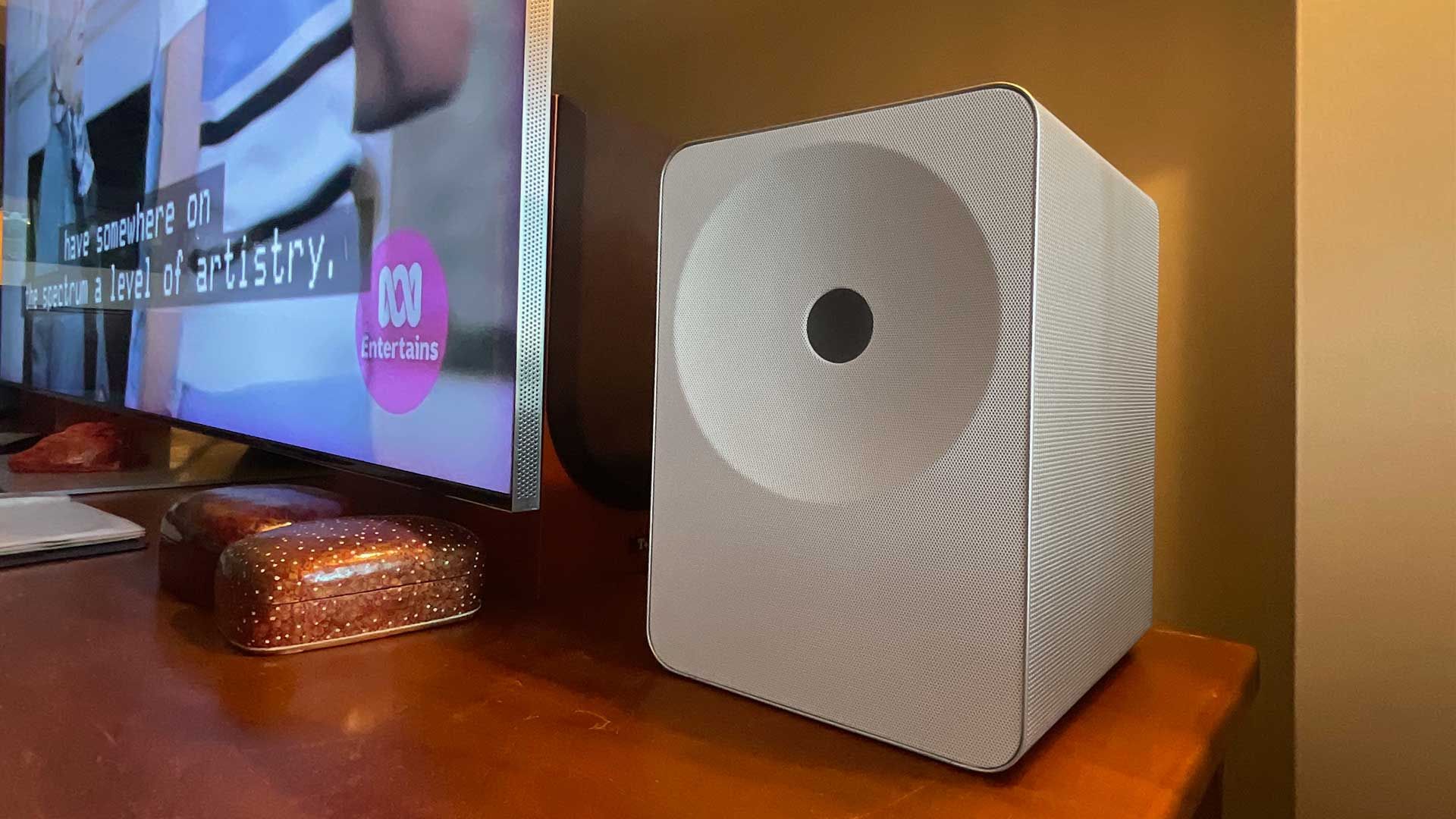
What Hi-Fi? published its Samsung Music Studio 7 review on August 14. The wireless speaker operates as a 3.1.1 system on its own or as 3.2.2 when two units are paired, combining left, centre and right output with bass, side radiation and a height channel in each enclosure.
The acoustic hardware comprises a 32mm super tweeter, a 104mm woofer and three 40mm midrange drivers, with two 95 x 60mm passive radiators assisting the low end. Each cabinet measures 269 x 185 x 191mm and weighs 5.6kg. The review confirmed physical LCR, height and bass elements; Samsung's engineers said phase-control signals derived from the left, right and top channels are added to the front channel to limit unwanted dispersion.
Optical and HDMI eARC are the only wired audio inputs, and HDMI is required to carry Atmos from a television. Spotify Connect, Tidal Connect, AirPlay 2, Google Cast and Roon broaden the streaming options, but the review found the choice of signal path mattered. Early streaming sessions sounded lean through the vocal mid-bass; after SpaceFit Sound Pro had adjusted to the room, that missing weight returned and the balance warmed appreciably.
The paired speakers were at their best with high-quality Atmos material fed from a Blu-ray player through a television over HDMI. What Hi-Fi? reported a broad soundfield, firmly placed vocals, substantial bass and clean handling of demanding peaks. One speaker still created an almost immersive spread, although left-right cues narrowed. Excess bass could be reduced with the app's woofer control, while the reviewers favoured AI Adaptive mode for films and Music mode for music.
Music Studio 7's defining move is to recast Samsung's soundbar experience in dispersion control and room correction as a speaker that works singly or in pairs. Compressed streaming did not reveal its full ability; Atmos over HDMI with SpaceFit Sound Pro engaged made the purpose of the 3.1.1 and 3.2.2 architecture much clearer.